There are many aspects to mineral collecting and what you do and focus on is personal taste. To me the most important mineral specimens are those that I have collected regardless of size. Many people are not able to field collect so they will purchase specimens but what do you collect? Some people become fascinated with micro-minerals due to their perfect and minimal space requirements. People with space limitations may also focus on thumbnail specimens and build a collection with this size limitation. The following is a potential list of collecting criteria:
Size: Micro, Thumbnail, Small Miniature,…..
Location: Some locations have hundreds of different minerals ex. Mont-Saint-Hilaire, Montreal
Country: Some people collect only specimens from the country they reside
Species: a particular specie such as fluorite
Systematic Collection: Collections based on mineral classification: elements, sulphides, silicates, carbonates,……
Field collected
Metaphysical properties.
Specimen Sizes
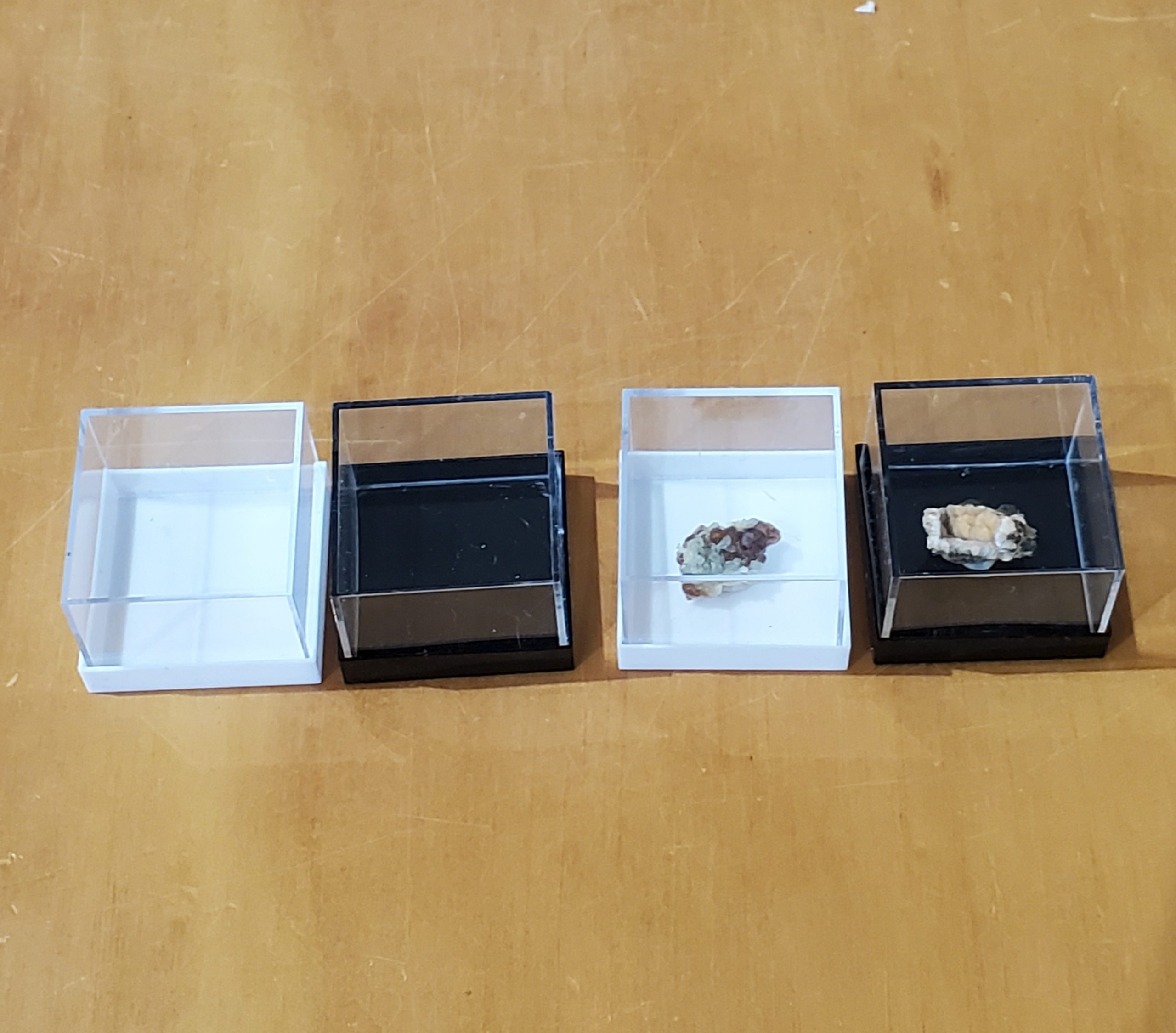
Micro: Generally fit in 1”x1”x3/4” plastic boxes, specimens <1cm
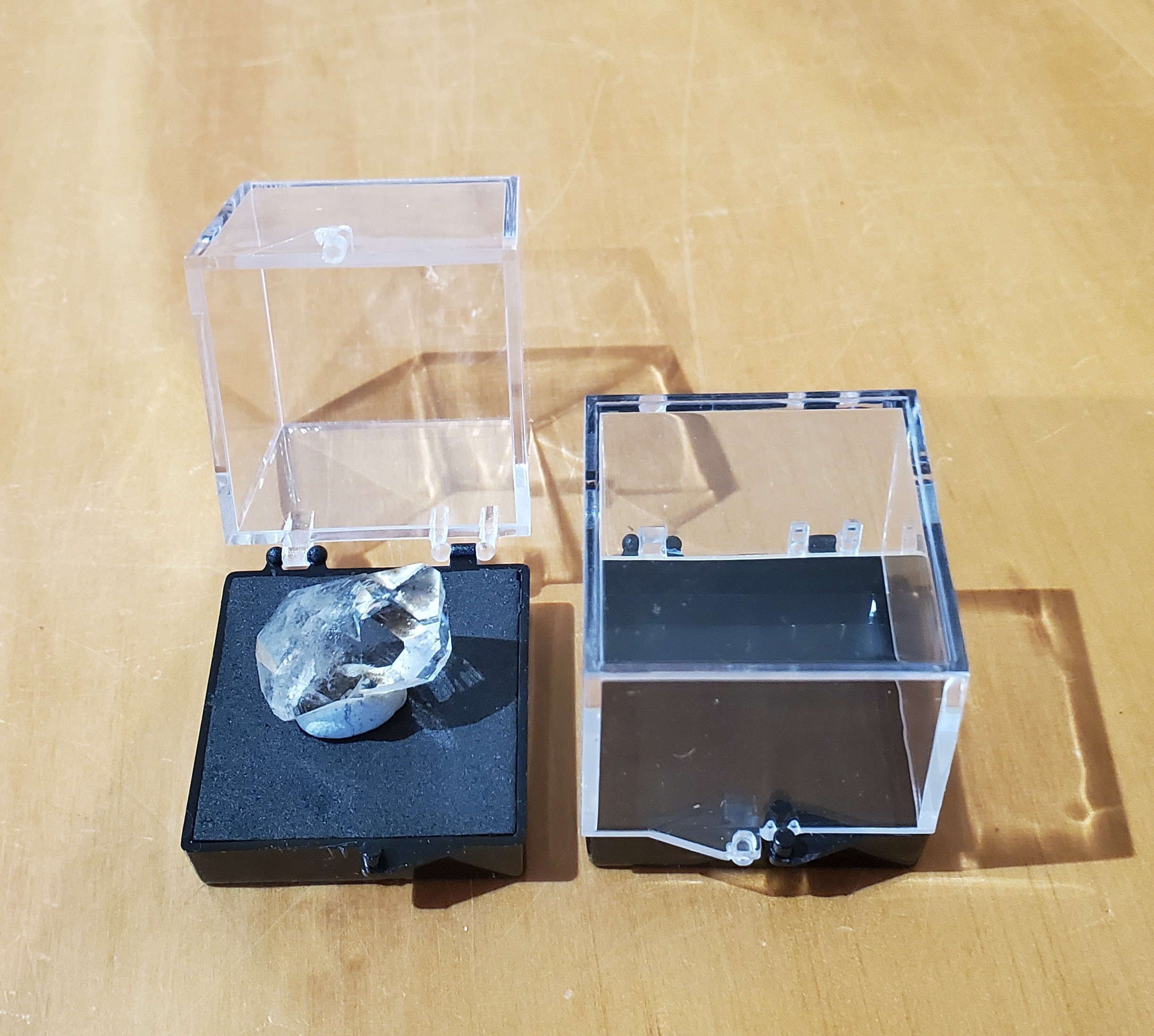
Thumbnail: Fit in 1 ¼” x1 ¼” x1 ¼” Perky boxes, sometimes with foam inserts, specimens <3cm
Small Miniature: 3-4.5cm
Miniature: 4.5-7cm
Small Cabinet: 7-10cm
Cabinet: 10-18cm
Museum: >18cm
Micro specimen boxes
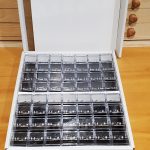
Thumbnail specimen boxes
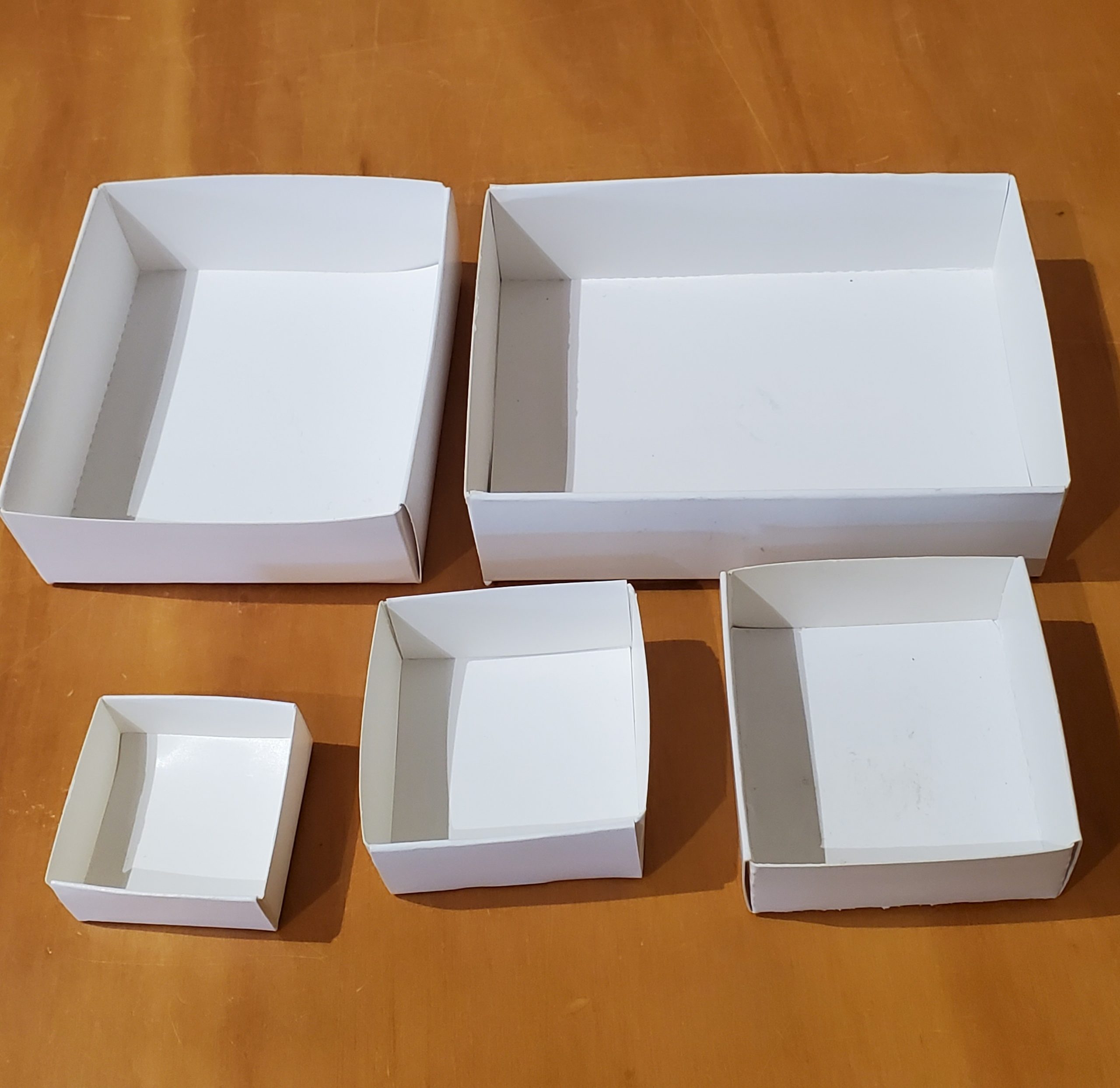
Fold up boxes
Labeling Specimens
There are many methods for labeling specimens and suffice to say if is very important that specimens are labeled.
For labeling the minimum required:
Main mineral and significant minor minerals if present.
The Location: Mindat is a good place to look for complete location information. Although for self-collected local material some locations are not in Mindat.
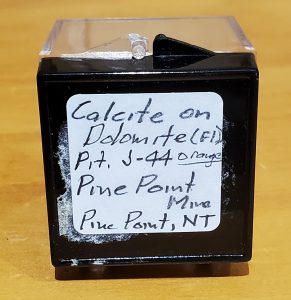
I like to label micro and Thumbnail specimens with sticky labels on the bottom of the boxes. This means you must pick up the box to read the label but on the other hand gives you have an unobstructed view of the specimen. Others prefer having a label inside the thumbnail box which gives quick viewing of the label but obstructs the back side of the specimen. The label inside is better when displaying in competition cases.
For larger specimens labels need to be included in the sample box.
When displaying large specimens sometimes custom bases are made out of acrylic and then the labels engraved in the acrylic. Wooden bases usually have a label attached to the base. I don’t like labeling on acrylic bases as I find it detracts from the specimen and sometimes appears to be more about the fancy base than the specimen. For this reason I prefer minimal visual support for a specimen.
Thumbnail label on the bottom
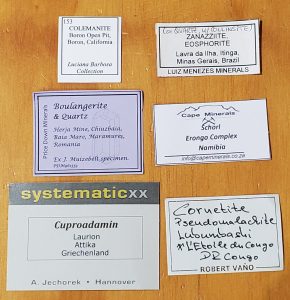
The top left is a TN label for inside the box and examples of other collectors labels
Storing and Displaying Specimens
Flats are commonly used for small collections but can become cumbersome and disorganized as a collection grows
Flat display
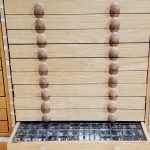
Cabinets are a great way to store specimens as they can be viewed easily and organized as to your priorities. I have made small cabinets for micro and thumbnail specimens where the drawers can be pulled out for easy viewing.
Larger cabinets with drawers of varying depth are great for larger specimens.
Thumbnail specimen cabinet
Display cases are great for showing specimens but caution must be taken because many colourful specimens fade when exposed to UV light from the sun. Amethyst in particular is notorious for fading over time. Here is a photo of The Arkenstone display/sale room with cabinets and display cases. Note there are no windows for sunlight.